
You must have an order with a minimum of 185,00 € to place your order, your current order total is 0,00 €.
Uncategorized
Is 4-MMC Neurotoxic? Examining the Scientific Evidence
There is a huge variety of synthetic compounds, and new ones often come to light. 4-methylmethcathinone (4-MMC; mephedrone), which stood out for its unique subjective effects, was one of them. First made in the 1920s and patented in the United States in the 1960s, it came to prominence as a designer drug in the 2000s. It is chemically similar to both stimulants of the cathinone class and other compounds. Increasing interest in research regarding this drug has also raised key questions, the most important among which is its safety. There are many things that we do not yet understand about the long-term effects of 4-MMC, and one of the most important questions for scientists to answer is – is Mephedrone Neurotoxic?
The present article examines the scientific evidence about the neurotoxicity of 4-MMC. We’ll take a look at what the compound is, how it affects the brain and what recent research on its long-term effects on neural health reveals. It is important for any person working in the area of study to understand these factors.
Understanding 4-MMC (Mephedrone)
4-MMC is a synthetic cathinone stimulant that is structurally similar to amphetamines. It is a releasing agent and reuptake inhibitor of the main neurotransmitters dopamine and serotonin. This dualism of action explains the many potent effects it has shown in neurochemical studies, which have placed this compound at center stage. Studying it can help researchers gain a deeper understanding of how monoamine transporters work, and how they can be affected by substances to change mood, behavior and cognition.
Because it acts powerfully on the brain’s reward and mood-controlling centres, questions of safety are inevitable. The question is whether exposure, particularly repeated or high-dose exposure, can cause lasting harm to nerve cells — a process called neurotoxicity.
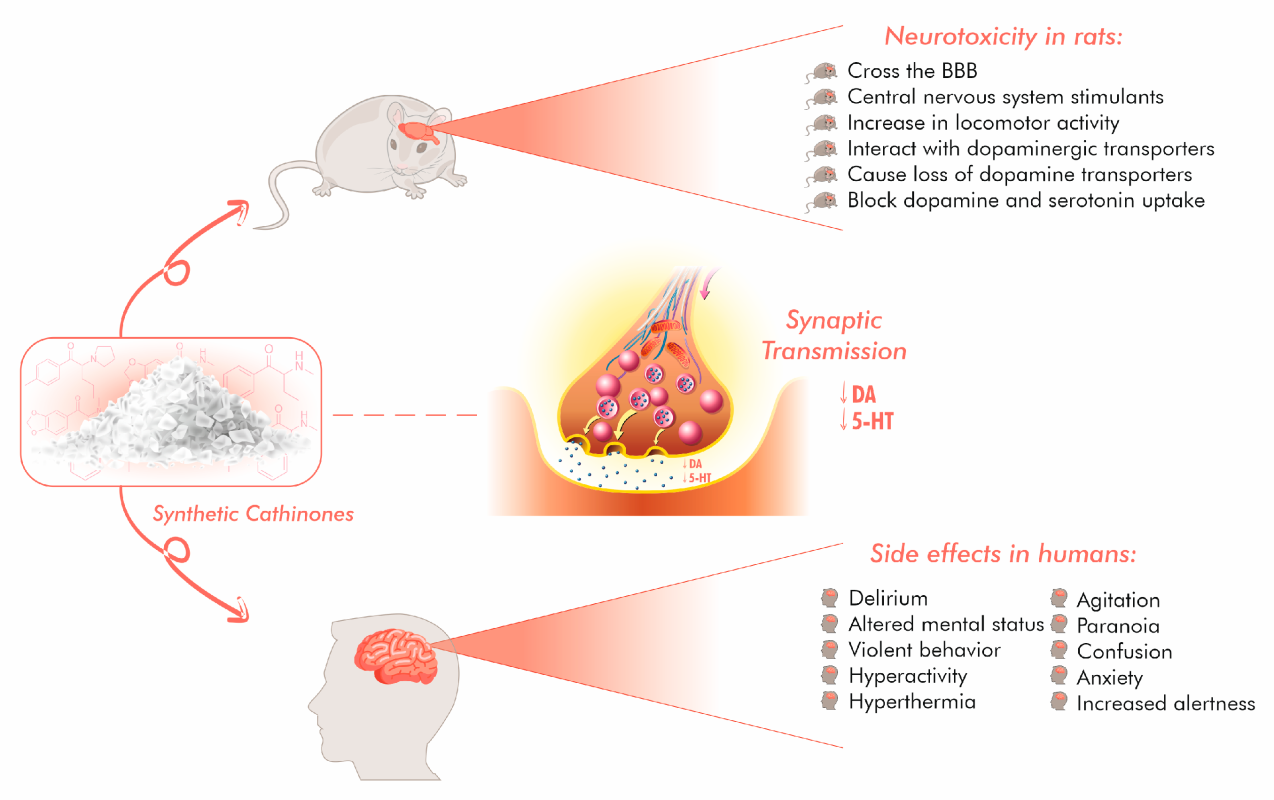
The Mechanisms of Potential Neurotoxicity
To decide whether 4-MMC is neurotoxic, we need to know what even constitutes neurotoxicity in the first place. Neurotoxicity is basically the harm or mortality of neurons due to exposure to some sort of chemicals. This damage turns out, for stimulants like 4-MMC, to be frequently those same systems that they are stimulating – the dopamine and serotonin systems.
Involvement of Serotonin and Dopamine Systems
4-MMC has a large serotonin (5-HT) and dopamine release action but also inhibits the reuptake of these neurotransmitters. This floods the synaptic cleft, the gap between neurons, with those potent chemicals. And so while this flood creates the well-known short-term effects of the compound, it can also severely strain the neural systems.
Research on similar compounds, like MDMA and methamphetamine, is starting to reveal that this sort of hyperactivity can result in a number of downstream negative consequences:
- Oxidative Stress: The metabolism of high amounts of dopamine and serotonin can generate reactive oxygen species (ROS), also known as free radicals. These free radicals attack cellular structures such as lipids, proteins and DNA resulting in cell death.
- Mitochondrial Disruption: Mitochondria power all cells, including brain cells (neurons). Oxidative stress may also damage mitochondria, decrease cellular energy and induce apoptosis (programmed cell death).
- Neurotransmitter Depletion: After the flood, neurons may have difficulty refilling their serotonin and dopamine. Direct long-term chronic dirt inhalation can result in prolonged depletion, impacting mood, cognition and motor programs.
- Axon Terminals are more vulnerable: The axon terminals, the boutons where neurons release neurotransmitters, are often the fragile parts of neurons in this scenario. Studies of other stimulants have demonstrated that they can degrade these terminals, interrupting communications between neurons.
4-MMC Research, What’s Out There?
Research of 4-MMC neurotoxicity has yielded varying results but raised some concerns. The majority of these studies were performed on animal models, such as rats and mice, which can offer a great deal of information but cannot perfectly replicate human trends.
Evidence for Serotonergic Neurotoxicity
Much of the research indicates that 4-MMC is especially destructive to serotonin neurons. A number of animal studies have shown decreased serotonin levels and SERT in concerned brain regions (hippocampus, cortex) on a long-term basis following the administration of high-dose 4-MMC. This is a typical sign of serotonergic neurotoxicity.
For instance, animals treated with 4-MMC schedules were shown in certain reports to exhibit enduring neurochemical changes weeks following the last treatment in brain serotonin (5-Hydroxytryptamine;5-HT). This indicates that impaired genes are not a transient, but rather a sustained insult to the brain. The harm seems to be dose-dependent, new and frequent doses of high amounts contribute to greater damage.
Evidence Regarding Dopaminergic Neurotoxicity
Evidence for 4-MMC-induced toxicity to dopaminergic neurons is less straightforward than it is for serotonergic neurons. Although short-term decreases in dopamine level have been reported by some studies, many have not found evidence for lasting damage of dopamine terminals similar to what occurs with methamphetamine.
This distinction is important. It implies that if 4-MMC damages the dopamine system, it likely does not do so to the same extent as in serotonergic neurons. That doesn’t mean that it is harmless, however. The overdriven kicking of the dopamine system is also causing oxidative stress, and other possibly harmful things.
Gaps in the Literature65 There is a minimum of follow-up and long-term outcome data on which to base GAPS AND LIMITATIONS In current practice, there are gaps that involve basic questions of when optimal care for high-risk or very low birth weight infants should be withdrawn.
Limitations A number of limitations need to be acknowledged in the present series of studies. However, some important lacunae impede a conclusion:
- Human Studies Absence: For ethical reasons, it is not possible to conduct controlled studies of the neurotoxicity of 4-MMC in humans. The majority of human data is derived from case and cohort studies, conducting on subjects and are inevitably confounded by issues such as polydrug use, unknown doses or presence of impurities.
- Animal Variability: Animal studies can be inconsistent from species to dosage, route of administration and frequency. This renders the construction of a single coherent image of its potential for neurotoxicity somewhat difficult.
- Substance Purity:Research grade 4-MMC is often employed in its pure, lab-origin form. Those available outside controlled environments may be impure, or mixed with other compounds that act on the brain, and could also have neurotoxic effects.
The Verdict Here: A Substance of Great Concern
So, is 4-MMC neurotoxic? According to the best science, especially from animal models, the answer is yes — at least with respect to the serotonin system. Chronic and binge 4-MMC exposure is highly correlated with the serotonergic neurodegeneration. It may not be quite as bad or permanent for the dopamine system, but you can’t just completely waive off the risk.
The potential neurotoxicity of 4-MMC means it merits exercise of the utmost caution in a research setting. The harm that it can do can extend and leave a lasting impact on mood, memory and cognitive function.
Prioritizing Safety in Research
Research chemicals are not something you should venture into lightly, as there is always some risk that comes with experimenting and trying to learn more about new products. As we research drugs like 4-MMC it is as important to be aware of the risks of their intakes, as well as knowing their effects.
All of us call on researchers to place the highest priority on safety. Science Life Always practice the integrity of proceeding based on Noble / Science If you are applying science in your daily (we can only hope that it be frequent) actions consult with and follow reliable sources to guide your path. Keep up to date and work with all things following appropriate safety guidelines. By promoting a cautious and education-based culture, it is possible to conduct science exploration responsibly.
