Uncategorized
Understanding 4MMC: A Researcher’s Guide
Nov
Mephedrone, also known as 4-methylmethcathinone (4MMC) or ‘meow meow’, has been a major research chemical for several years. Being a derivative of Cathinone, it also exhibits similar characteristics referring to the whole class. Its special characteristics have led to it being the focus of considerable research, which has given new information regarding pharmacology and neurochemistry. Knowledge of the properties of 4MMC is necessary to such researchers and scientists who wish to ply their trade in a responsible and effective manner.
This guide is designed for the research community to provide high-quality information on 4MMC. We will be look into its chemical background, history and proven uses in a lab environment. And you want it to be a useful, fact-filled destination for scientific exploration. Analysing its properties and mechanics will bring us to a deeper understanding of the plant and its capabilities in helping us understand psychoactive substances.
What Exactly is 4MMC?
4-methylmethcathinone (4MMC) is a synthetic cathinone and an amphetamine analogue. Cathinones occur naturally in the khat plant (Catha edulis) which has a long history of use in many parts of Africa and the Arabian Peninsula. The 4MMC is made by researchers to observe how minor modifications in the structure of cathinone influence on its activity and interactions with biological systems.
Chemical Structure and Properties
The action of 4MMC is dependent upon its chemical structure. It has a phenethylamine core with the alkyl sidechain containing an oxygen bridge at Rα. 4MMC is characterized by having a methyl substituent at the fourth position of the phenyl ring and these substitutions are what distinguish 4MMC from other cathinones such as 3-MMC (3-methylmethcathinone).
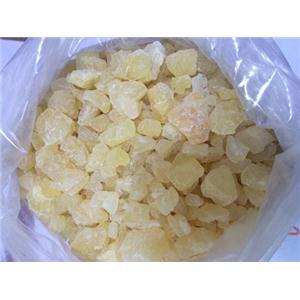
This small difference in structure really changes the behavior of molecule. These differences are often good to study because they can help researchers understand the structure-activity relationship, the notion that a physical form of a compound determines what it is doing in the body. In the laboratory, 4MMC is commonly encountered as a white or offwhite crystalline powder. It is water- and polar-soluble, suitable for preparing solutions condemned to analytical test.
The Scientific Exploration Journey of 4MMC
The tale of 4MMC’s origins goes back much further than any public notice it may ever have had. The early 20th century saw the investigation of synthetic cathinones. However, 4MMC itself was not synthesized and described as a scientific compound until many years following its discovery. Its main use was as a research chemical, a compound employed by pharmacologists and chemists in the evaluation of new physiological pathways.
In the 2000’s it was more popular and investigated for its effects on the central nervous system. They were especially intrigued by the process through which it exerts its effects — namely, its ability to modulate levels of crucial neurotransmitters like dopamine, serotonin and norepinephrine. These experiments yielded invaluable information indicating the manner in which cathinone‐derived compounds interact with brain monoamine transporters. This research contributes to the behavioral and physiological effects in preclinical models.
Lab use of 4MMC
The utility of any research chemical depends on its use in controlled scientific studies. 4MMC is no exception. The principle of this system is based on being a research and analytical tool.
Analytical Reference Standard
4MMC is widely utilized as an analytical reference standard. Pure and characterized compound samples are needed by forensics labs and toxicology departments to create and validate testing methods. When they have a banking of 4MMC, and they receive an unknown sample, we will use these techniques to compare the unknown sample with 4MMC by means of gas chromatography mass spectrometry (GC-MS) or liquid chromatography-mass spectrometry (LC-MS). This permits to determine and quantify the substance with a high precision. Analytical testing would simply not be possible without high purity reference materials.
Neuropharmacological Research
Little is known about the neuropharmacology of 4MMC; however, several studies have concentrated on its effects in the brain. In vitro (cell-based) and in vivo animal studies have found that 4MMC is an inhibitor of the monoamine transporter as well as a substrate for the reuptake transporters.
Dopamine: 4MMC elevates the extracellular levels of dopamine, a neurotransmitter with reward and motivation functions.
Serotonin: It’ll also have a powerful impact on serotonin levels, which is a major regulator of mood, appetite and sleep.
Norepinephrine: The drug raises norepinephrine, a neurotransmitter that plays a role in the body’s “fight or flight” response and alters alertness and arousal.
By exploring these interactions, researchers can better understand the intricate mechanics of the brain’s reward system. This work may also help us understand more generally how drugs of abuse produce their unique action. By contrasting neurochemical profiles between 4MMC and other closely related molecules including 3-MMC or MDMA, the investigations allow researchers to evaluate the particular roles of different brain circuits.
Comparing 4MMC and 3-MMC
It is common for 4MMC to be researched in conjuction with its similar relative 3MMC. Despite their chemical similarity, the change in position of the methyl substituent (at 4 and 3) results in significant differences in their pharmacology.
According to the research writings, 4MMC likely has a more balancing effect on serotonin release then 3-MMC. 3-MMC, however, is occasionally reported to have a more pronounced effect on dopamine. This fine discrimination is of interest to pharmacologists. They provide the context for a more thorough understanding of how individual molecular forms relate to particular neurochemical effects. It depends on your research question for which one Each has advantages and disadvantages.
Toxicity and Handling in the Laboratory
Any research chemical you choose to work with will be used properly and in a supervised environment. Use as: lab reagent 4-MMC is suitable for use only in the laboratory and are not approved for human consumption. Appropriate PPE (i.e., gloves, safety eyewear, and lab coat) must be worn to avoid inadvertent exposure.
Quantitation is also important for reproducibility and precision of results. Weighing the material on a calibrated balance is the common method. All components must be kept in a dry, dark place and used within 12 months of purchase in order to ensure proper function of chemicals. Good record keeping and labelling also are important aspects of good laboratory practice.
The Future of Cathinone Research
Research on man-made cathinones including 4MMC is very much ongoing. They are important probes for the study of the human brain and nervous system. It will be of interest to investigate whether compounds with more selective pharmacological actions against the various neurotransmitter systems can be developed, and their potential ethical considerations regarding drug development.
As our approaches become more advanced, we will able to extract even finer knowledge of such compounds as 4MMC. This research is extremely important in laying the groundwork that will serve chemistry, pharmacology and toxicology for generations. 4MMC continues to serve as a prikture of chemical characteractivity relationships (tables 2 and 3) for the scientific community in its quest to understand genotype–phenotype mechanisms that underlie biocompatability.
